
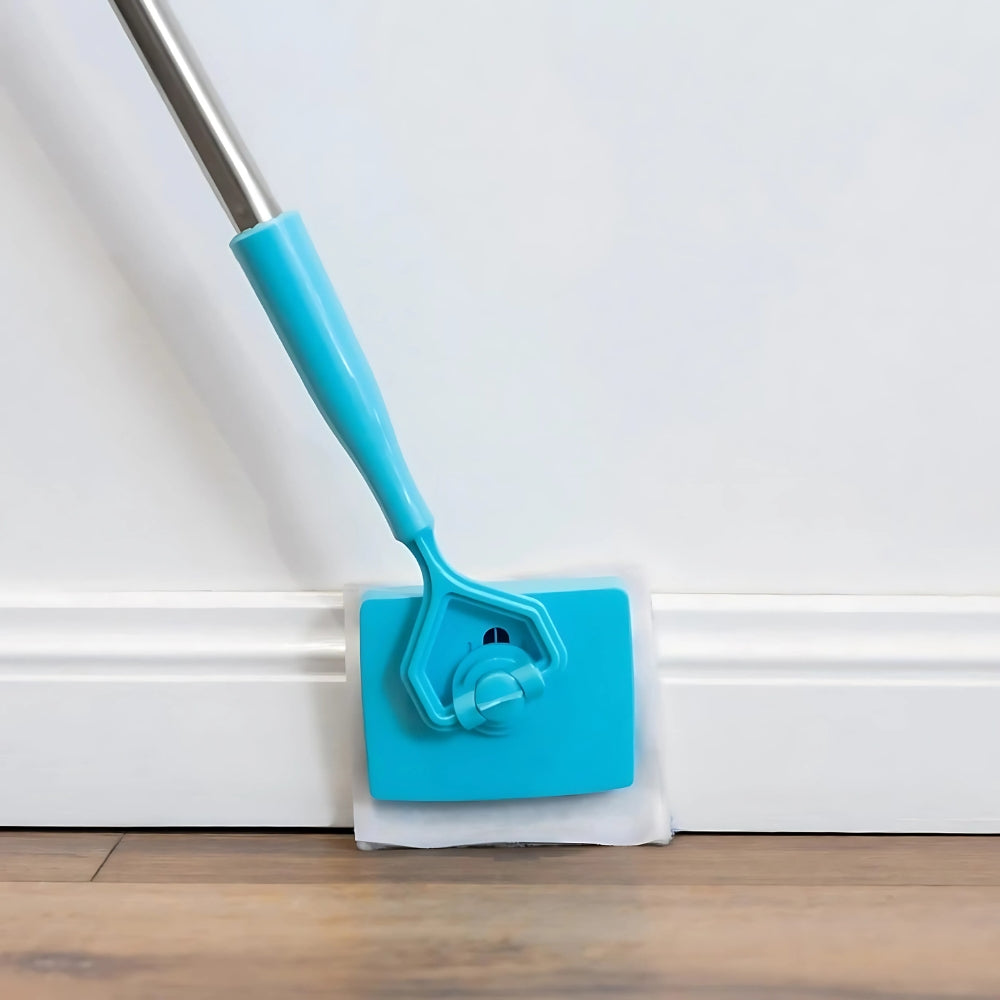
Skirting boards are easy to ignore until the sunlight hits them and reveals a line of dust along the bottom of the wall. They collect pet hair, everyday dust and marks from shoes, vacuum cleaners and furniture.
The problem? Cleaning them usually means bending, crouching or getting down on your knees.
If you're looking for how to clean skirting boards without bending, the solution is to use a suitable long-handled cleaning tool and choose the right method for the finish.
Here's how to remove dust, deal with marks and keep skirting boards looking tidy without turning a quick clean into a full workout.

Why do skirting boards collect so much dust?
Skirting boards sit close to the floor, where dust and hair naturally accumulate. Air movement, foot traffic and nearby furniture can also leave marks.
White or light-coloured boards tend to show dirt clearly, but darker finishes can collect visible dust too.
Regular maintenance prevents build-up and often means you can use gentler cleaning methods rather than scrubbing stubborn marks later.
What you'll need
Gather a few simple supplies:
-
A microfibre cloth or suitable long-handled duster.
-
A vacuum cleaner with a soft brush attachment.
-
A mild cleaner appropriate for the surface.
-
A clean, slightly damp cloth for marks.
-
A dry cloth for finishing.
Avoid soaking the boards, particularly if they're made from timber, MDF or another material that can be damaged by moisture.
Step 1: Dry-dust the skirting boards first
Start by removing loose dust and pet hair before introducing water.
Use a soft duster or a vacuum attachment suitable for the surface. Work along the top edge and face of the board, paying attention to decorative grooves where dust can collect.
Dry-dusting first helps prevent loose dirt from turning into muddy streaks when you wipe the surface with a damp cloth.
Step 2: Use a long-handled tool to avoid bending
A long-handled cleaner allows you to reach the lower wall without repeatedly crouching down.
The ProEdge Skirting Board Cleaner is designed for cleaning skirting boards with a longer reach and a rotating head. The product page also describes reusable, washable cleaning pads.
Follow the product instructions and select a suitable pad for the surface you're cleaning.
Move along the board with controlled strokes rather than pressing hard. Excessive pressure isn't necessary for everyday dusting and can damage delicate finishes.
Step 3: Damp-clean marks carefully
Dusting won't always remove fingerprints, shoe marks or splashes.
If the board needs more attention:
-
Check the manufacturer's care instructions for the paint or material.
-
Test your cleaning solution on a small, inconspicuous area.
-
Dampen a microfibre cloth or suitable cleaning pad rather than soaking it.
-
Wipe gently, working in manageable sections.
-
Remove any remaining cleaner as directed.
-
Dry the surface if necessary.
Use a mild, compatible cleaner and avoid abrasive pads, harsh solvents or excessive moisture.
Step 4: Take extra care with painted skirting boards
Painted surfaces can vary in durability. Some finishes tolerate gentle wiping, while others may mark, dull or lose paint when exposed to strong chemicals or aggressive scrubbing.
For painted skirting boards:
-
Use a soft cloth or compatible pad.
-
Avoid abrasive sponges.
-
Don't scrub repeatedly at one spot without checking the finish.
-
Test cleaning products in an inconspicuous area.
-
Follow the paint manufacturer's cleaning recommendations.
If paint is peeling or the board is swollen, investigate the cause before damp-cleaning it.
Step 5: Don't forget corners and grooves
Corners, mouldings and the upper edge of skirting boards often collect the most noticeable dust.
Use a smaller attachment or a soft brush to reach tight spaces. A rotating head may help you adjust the angle without continually changing position.
For stubborn dirt, work gently and avoid forcing a large cleaning head into a narrow gap.
How often should you clean skirting boards?
There isn't one schedule for every home, but this is a useful starting point:
-
Weekly: remove visible dust in high-traffic rooms.
-
Fortnightly: dust skirting boards throughout the home.
-
Monthly or as needed: damp-clean marks and build-up.
Homes with pets, children or frequent foot traffic may need more regular attention.
Is a long-handled skirting board cleaner worth it?
If you find yourself putting off this chore because of the bending involved, a long-handled tool may make it easier to include in your regular cleaning routine.
The ProEdge Skirting Board Cleaner is designed for skirting boards and other suitable surfaces, including some walls and ceilings when used with the appropriate attachment.
Always check the product instructions and surface compatibility before using it beyond skirting boards.
Image placement: Use the official ProEdge product image near this section. If the gallery includes a photo showing the long handle or rotating head in use, add it beside the step-by-step instructions.
Frequently asked questions
Can I clean skirting boards with just water?
For light marks, a slightly damp cloth may be enough. However, too much moisture can damage some materials, so check the surface care instructions and dry the board if necessary.
What is the best cleaner for painted skirting boards?
A mild cleaner approved for the paint finish is a sensible starting point. Test it in an inconspicuous area first and avoid harsh chemicals or abrasive products.
How do I remove scuff marks?
Try gently wiping the mark with a soft, slightly damp cloth and a suitable cleaner. Don't use an abrasive pad or apply heavy pressure without confirming the finish can tolerate it.
Can I use a skirting board cleaner on walls?
Some long-handled tools can be used on compatible wall surfaces. Check the product instructions and test the pad on an inconspicuous area, especially on matte paint or delicate finishes.
How do I clean corners without bending down?
A long-handled tool with an adjustable or rotating head may help reach corners. For tight grooves, use a suitable smaller brush and work slowly.
Make skirting board cleaning easier
The key to clean skirting boards is regular dry-dusting, careful damp-cleaning and avoiding harsh methods that damage the finish. A suitable long-handled tool can also reduce the need to crouch or bend repeatedly.
Explore the ProEdge Skirting Board Cleaner or browse the Hive & Hush Home & Living collection for more practical ways to make everyday cleaning manageable.



Leave a comment
This site is protected by hCaptcha and the hCaptcha Privacy Policy and Terms of Service apply.