
The cabin lights are down, the kids have finally nodded off, and you're sitting bolt upright, eyes wide open, counting the hours until landing. Your head tips forward, you jolt awake, and the cycle starts again. If you've ever stepped off a plane feeling like you haven't slept in two days, you're not alone. Sleeping sitting up, in a busy cabin, is hard work.
The good news is that a few easy habits can make a real difference. With summer holidays and Christmas trips coming up, this guide on how to sleep on a plane covers what to do before you fly, how to set up your seat, and the small comforts that help you rest, so you can arrive ready to enjoy the holiday instead of counting down to bedtime.
Quick answer: To sleep on a plane, choose a window seat if you can, dress in soft layers, plan your sleep around your destination's time zone, skip the late coffee, block out light and noise with an eye mask and earplugs or headphones, and give your head and neck something soft to rest against, like a wrap-around memory foam travel pillow.

Why Is It So Hard to Sleep on a Plane?
At home you lie flat in a dark, quiet room. On a plane you're upright in a narrow seat, with engine hum, announcements, meal trolleys and reading lights all around you. Your head has nowhere to rest, so it drops forward or rolls to the side, and that little jolt is often enough to wake you up.
Add a different time zone, a dry cabin and the excitement (or stress) of travel day, and it's easy to see why so many of us land feeling foggy. You can't turn a plane seat into your own bed, but you can make it a lot more restful.
10 Tips for How to Sleep on a Plane
1. Choose Your Seat Early
A window seat gives you a wall to lean against and means nobody climbs over you while you're dozing. Seats away from the toilets and galley are usually quieter. If you need to get up often, an aisle seat may suit you better, so choose what helps you relax.
2. Plan Your Sleep Around Your Destination
Before you board, look at the local time where you're landing. Healthdirect's jet lag guide suggests: "Try to eat and sleep how you would at your destination while you are on the plane." If it's night there, that's your cue to settle in.
3. Dress in Soft, Easy Layers
Cabins can swing from warm to chilly. Wear loose, breathable clothes, comfy socks and a cardigan or light jumper you can pull on or take off without waking up properly.
4. Go Easy on Caffeine
A coffee at the airport is lovely, but if you're hoping to sleep on the flight, switch to water or herbal tea a few hours before you board.
5. Sip Water Through the Flight
Cabin air is dry. Keep a refillable bottle handy and take small sips, so you're comfortable without needing to get up every half hour.
6. Block Out the Light
An eye mask makes a big difference when the person next to you is watching movies with the brightness turned all the way up. Pull the window shade down too, if your neighbours agree.
7. Turn Down the Noise
Earplugs or noise-cancelling headphones soften the engine hum and cabin chatter. A calming playlist or a familiar podcast you've downloaded before the flight can help you drift off.
8. Give Your Head Something to Rest On
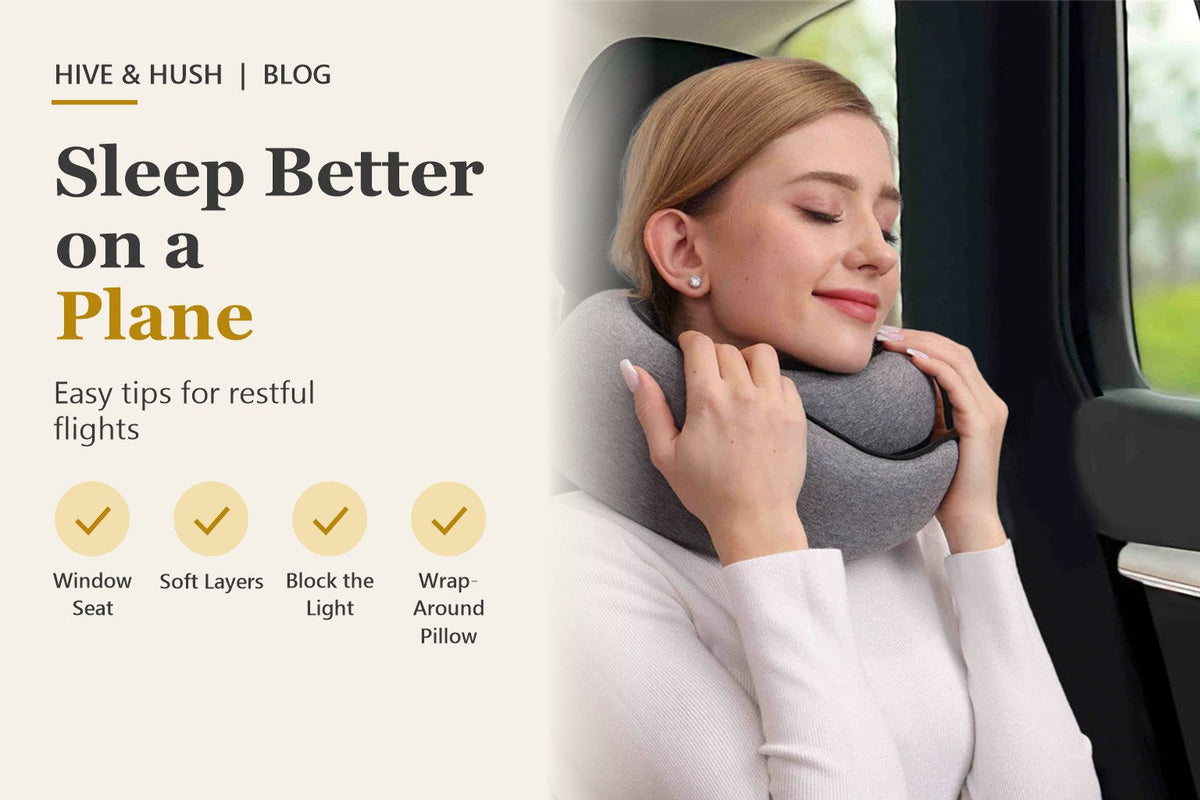
This is the one most of us forget. When your head has soft support on all sides, it's much easier to relax into the seat instead of bracing against it. A good travel pillow does exactly that.
9. Buckle Up Over Your Blanket
Fasten your seatbelt loosely over the top of your blanket, so the crew can see it's on and won't need to wake you if the seatbelt sign comes on.
10. Keep a Wind-Down Routine
Brush your teeth, pop on some lip balm and moisturiser, put your phone away and dim the screen. Doing the same little steps you'd do at home tells your body it's time to rest.

How to Set Up Your Seat for Sleep
Once the meal service is over, take five minutes to get everything sorted before you close your eyes. You'll sleep longer when you're not reaching for things every few minutes.
- Keep essentials in one small pouch: eye mask, earplugs, lip balm, a pen for arrival cards and your glasses case.
- Stow the rest: put your bag under the seat in front, so your legs aren't fighting for space.
- Recline gently: check behind you first, and recline a little rather than all the way during meals.
- Find your position: lean into the window or sit back with your head centred, whichever feels more natural.
- Pop on your pillow last: fasten it once you're settled so it sits snugly where you want it.
Choosing a Travel Pillow That Actually Helps
Many travel pillows are soft U-shapes that look comfy but leave a gap at the front, so your head still drops forward when you doze off. A wrap-around design gives your head something to rest against in every direction.
The ProRelief Memory Foam Travel Pillow wraps 360 degrees around your neck and is made from soft memory foam that shapes to you. A velcro strap lets you adjust the fit and helps keep the pillow in place if you shift in your seat. It's lightweight and compact, so it fits easily in your bag, and it comes in grey, black, navy or pink. It's just as handy on road trips, trains and buses, or for a nap on the couch at home.
Sleeping on Overnight & Long Haul Flights
Overnight flights are the easiest to sleep on because your body is already expecting rest. Eat lightly before or early in the flight, then start your wind-down routine as soon as the trays are cleared.
On daytime flights heading into an evening arrival, a short nap can help, but try not to sleep the whole way, or you may be wide awake at midnight when you land. Healthdirect also notes that for the first few days, short naps can help you stay more alert, so go easy on yourself after you arrive.
Travelling with little ones? Try to keep their usual bedtime routine on board: pyjamas, a favourite toy, a story and lights down. When they settle, you've got a better chance of resting too.

What to Look for in a Travel Pillow
- Wrap-around shape: ProRelief offers 360 degree support around your neck.
- Memory foam: soft foam that shapes to you rather than flattening out.
- Adjustable fit: a velcro strap so you can make it snug or looser.
- Easy to pack: lightweight and compact enough to fit in your bag.
- Versatile: handy for flights, cars, trains, buses and home.
- A colour you'll spot: grey, black, navy or pink.
Your Plane Sleep Checklist
- Choose a window seat when you book
- Check the local time at your destination
- Wear soft layers and comfy socks
- Swap coffee for water a few hours before boarding
- Pack an eye mask and earplugs or headphones
- Download a calming playlist or podcast
- Keep sleep essentials in one small pouch
- Pack your travel pillow in your hand luggage
- Buckle your seatbelt over your blanket
More Rest, More Hush
Learning how to sleep on a plane is really about stacking small comforts: the right seat, soft layers, less light and noise, a routine that feels like home and a soft place to rest your head. Put a few of these together and you're far more likely to land feeling like yourself. If you have ongoing neck or back pain, or any health concerns about flying, talk to your GP or a physiotherapist before your trip.
Find more ideas for an easier home and holiday in our Home & Living Collection, or see what other families love most in Hive Favourites.
At Hive & Hush, we're a veteran-owned family business from Perth, and you can read our story anytime. Every order comes with fast & free shipping and friendly Australian support 7 days. Pillows can be returned for change of mind when they're unopened and sealed, with free return shipping Australia & NZ wide. If something isn't right, we'll make it right.
Shop the Travel Essentials
Shop the ProRelief Memory Foam Travel Pillow
Sources
From The Hive
FAQ
How can I sleep better on a plane?
Choose a window seat, dress in soft layers, plan your sleep around your destination's time zone, cut back on caffeine before boarding, block out light and noise, and give your head soft support with a travel pillow.
Which seat is easiest to sleep in on a plane?
Many people find a window seat easiest because you can lean against the wall and nobody needs to climb past you. Seats away from the galley and toilets are usually quieter.
Should I sleep on the plane to avoid jet lag?
Healthdirect suggests trying to eat and sleep on the plane the way you would at your destination. If it's night where you're landing, try to rest; if it's daytime, a short nap may suit you better.
How do you stop your head falling forward when sleeping on a plane?
Lean into the window or recline slightly, and use a wrap-around travel pillow that gives your head something soft to rest against at the front and sides.
Can I adjust the fit of the ProRelief travel pillow?
Yes. It has a velcro strap, so you can adjust the fit and keep the pillow in place if you move in your seat.
What colours does the ProRelief travel pillow come in?
Grey, black, navy and pink.

Leave a comment
This site is protected by hCaptcha and the hCaptcha Privacy Policy and Terms of Service apply.